
Lesson 10
Bulk Fermentation
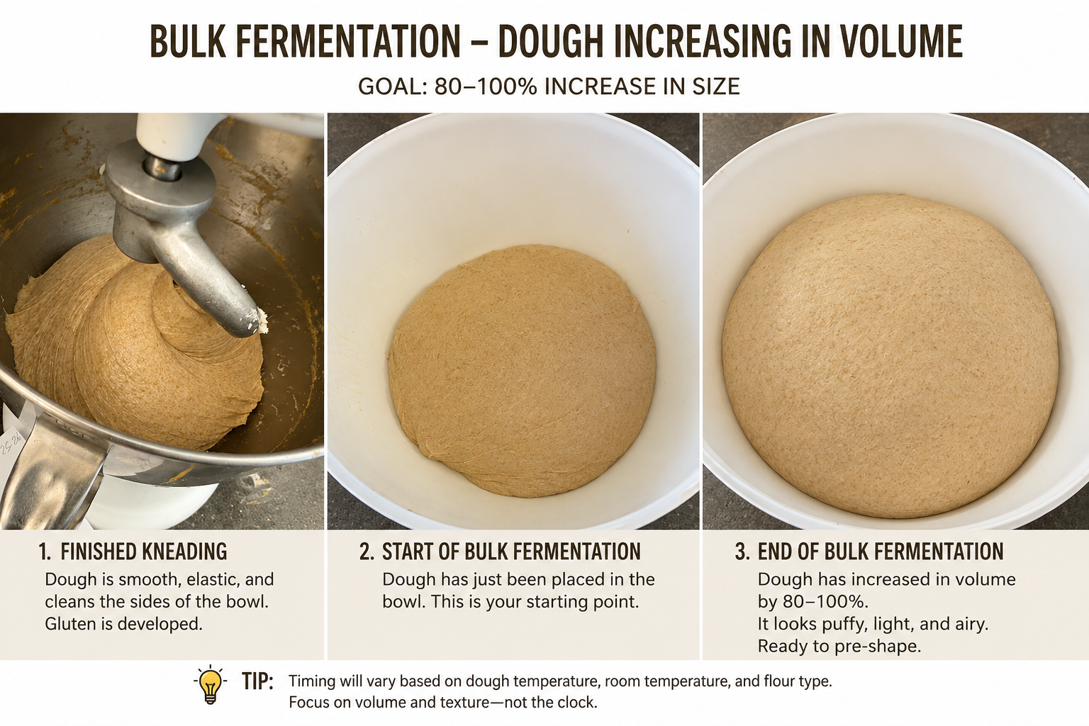
Bulk fermentation is the first rise of the dough after mixing. During this stage, yeast or sourdough culture feeds on natural sugars in the flour and produces carbon dioxide. Those tiny gas bubbles become trapped in the gluten network, causing the dough to rise.
At the same time, the dough develops flavor, texture, and strength as enzymes break down starches into sugars and fermentation by-products develop. Simply put, bulk fermentation is where your dough develops strength, flavor, and volume.
Why Is Bulk Fermentation Important?
Bulk fermentation is more than waiting for dough to rise. During this stage, the dough:
- Builds strength
- Develops flavor
- Traps fermentation gases
- Can develop a lighter, softer loaf
Rushing this stage often results in dense bread. Letting it continue too long can weaken the gluten and cause the dough to collapse.
What Affects Bulk Fermentation?
No two batches ferment at exactly the same rate. The pace depends on:
- Dough temperature
- Room temperature
- Flour type
- Hydration
- Amount of yeast or sourdough starter
- Strength of the starter
- Dough size
Fresh-milled dough may ferment differently from dough made with commercial white flour. Because it contains the whole grain, fermentation can progress more quickly in some recipes, so watch the dough instead of relying on the clock.
Coils During Bulk
If your dough feels weak, one or more sets of stretch-and-folds or coil folds during bulk fermentation can strengthen the gluten network without additional kneading. Let the dough rest between folds so the gluten can relax before the next strengthening session. If it already feels strong, it may not need extra folds.
How Do I Know When Bulk Fermentation Is Complete?
Recipes may call for a 50%, 75%, or 100% increase in volume, and those percentages can be hard to estimate by eye. A fermentation bowl with visible measurement or rise markings makes it easier to see how much the dough has grown.
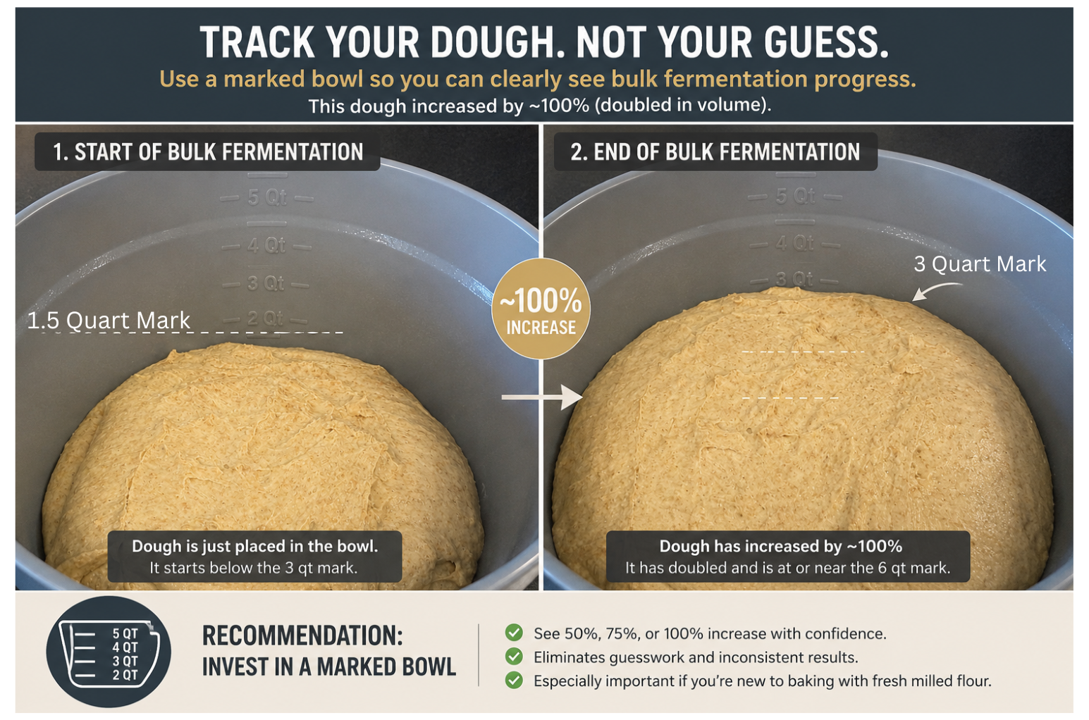
The right amount of rise depends on the recipe. Some doughs are shaped after a 50% increase, while others may continue to 75% or even double. Do not automatically wait for every dough to double—follow the target in your recipe.
As it ferments, dough should generally feel lighter than just after mixing, look puffier while holding its shape, show some visible bubbles, and feel smoother and more elastic. It may jiggle slightly when you gently shake the bowl.
I proof most of my dough in a proofing oven set to approximately 82–85°F (28–29°C). This provides a more consistent fermentation environment, but I still watch the dough rather than relying only on the clock. If it needs more strength, I may do one or two gentle coil folds; otherwise, I let time and fermentation do most of the work.
For sandwich bread, I shape the dough when it reaches the amount of expansion called for in the recipe. I do not automatically wait for it to double.
My Recommendation
Consider a fermentation bowl with clear rise markings. Being able to identify a 50%, 75%, or 100% increase can help a beginning baker judge fermentation more consistently.