Lesson 6
Choosing a Grain Mill
I use and recommend the NutriMill Classic Grain Mill. It is fast, reliable, easy to use, and makes fine whole-grain flour for regular bread baking.
A grain mill is a significant equipment purchase. The right one depends on how often you bake, how much flour you need at a time, and whether you want fine flour only or a wider range of textures.
High-Speed Impact Mills
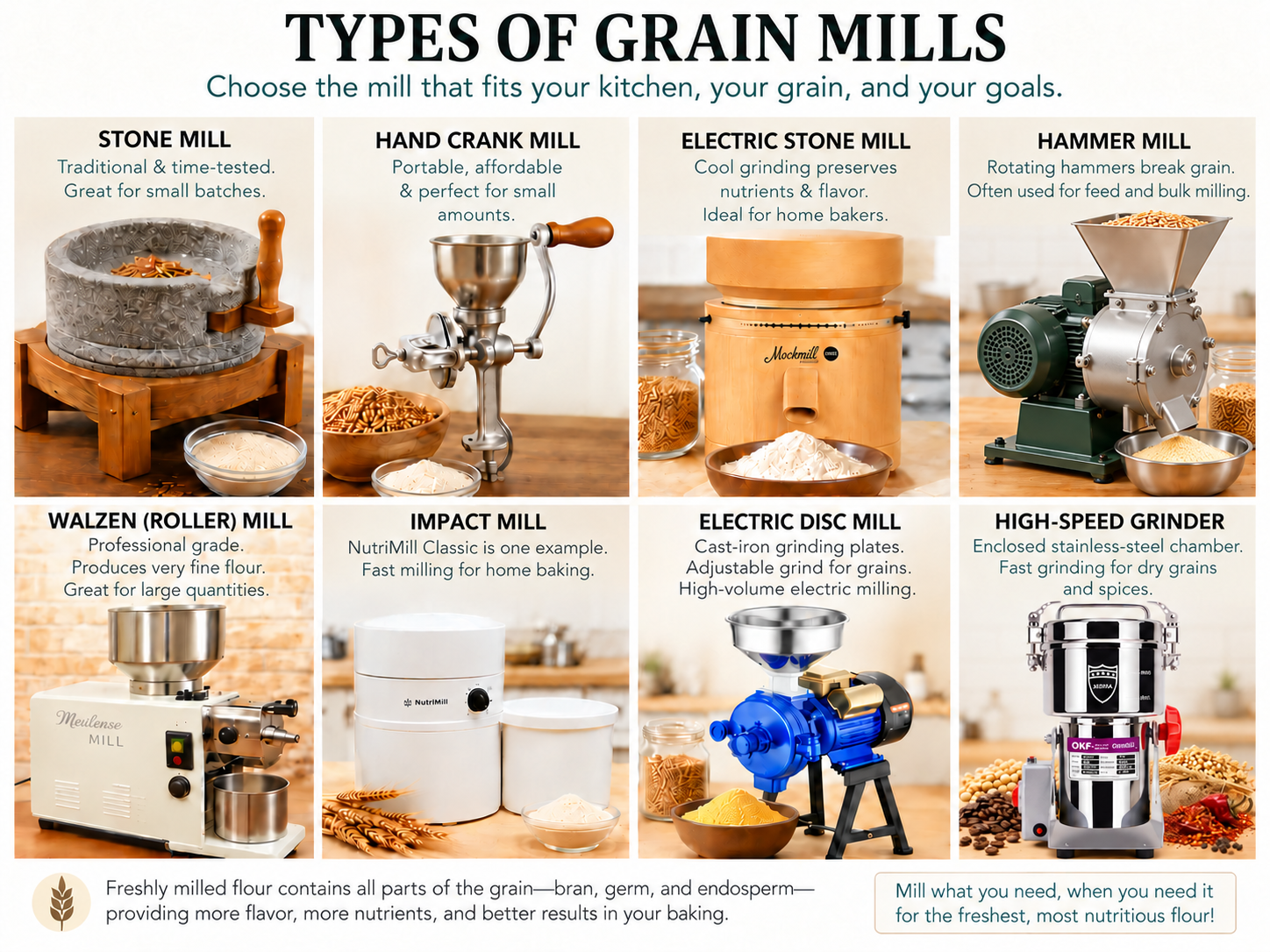
Impact mills use fast-moving milling heads to break dry grain into flour. They are designed to make fine flour quickly and are handy for sandwich bread, rolls, pizza dough, muffins, and everyday baking.
- Examples: NutriMill Classic, NutriMill Impact, and WonderMill Electric Grain Mill.
- Useful for frequent bread baking and for milling several cups at a time. The covered canister collects the flour.
- They generally make fine flour, with some texture adjustment depending on the model.
- They can be loud while running.
- Use only grains and legumes allowed by the manufacturer. Impact mills are generally for clean, dry, non-oily ingredients; they are not meant for nuts, oily seeds, or wet ingredients.
- They are not the best choice when you want true cracked grain, grits, or very coarse meal.
Stone-Burr Mills
Stone-burr mills grind grain between two milling surfaces. Depending on the model, they can make fine flour as well as coarser meal or cracked grain.
- Examples: Mockmill 100, Mockmill 200, KoMo Fidibus Classic, and NutriMill Harvest.
- A good fit if you want to choose between flour, coarse meal, and cereal textures.
- Many are slower and quieter than high-speed impact mills, though sound and speed differ by model.
- Flour falls directly into a bowl or container, so some models can release more dust.
- They may need brushing or occasional cleaning around the stones and flour chute. Follow the maker’s instructions for allowed grains and maintenance.
Manual Grain Mills
Manual mills use a hand crank to turn metal or stone burrs. They work without electricity and can serve as a backup or make small amounts of flour, but milling enough fine flour for several loaves takes effort.
- Examples: Country Living Grain Mill, Wonder Junior Deluxe, and GrainMaker Model No. 99.
- Useful for emergency preparedness, off-grid use, occasional milling, or small batches.
- They have no electric motor, but are slower and more physical to use.
- Some models need more than one pass to make very fine flour.
- Clamp or mount the mill firmly to a stable surface.
Stand-Mixer Grain Mill Attachments
A grain mill attachment can be a less expensive way to try fresh milling if you already own the matching mixer. It is usually better for smaller amounts and occasional use than for milling flour for several loaves at a time.
- Examples: KitchenAid All-Metal Grain Mill Attachment and Mockmill Stone Grain Mill Attachment for stand mixers.
- They take up less storage space than a separate countertop mill.
- They can mill more slowly and may require the mixer to run for an extended time.
- Capacity and flour fineness can be more limited than with a dedicated mill; frequent heavy use puts more demand on the mixer.
What About a Vitamix?
A Vitamix can grind wheat berries into flour, so it can be a convenient way to try fresh milling if you already own one. Vitamix recommends its Dry Grains Container for processing larger amounts; the standard container can be used for occasional grinding when you follow the instructions for your model. A blender works in smaller batches and does not collect flour in a separate canister, so it may feel less convenient when you bake bread often or need a large amount of flour.
For occasional use, it can get you started. If you plan to mill several cups of flour regularly, a dedicated grain mill is easier to use. Browse my Amazon storefront for a Vitamix ↗
Fine, Medium, or Coarse?
One of the advantages of milling at home is being able to adjust the texture for what you are baking. Mill settings are different from one model to another, so use your manufacturer’s guide as a starting point.
Fine grind: my everyday setting
A fine, powdery flour is my preferred starting point for most baking. It hydrates evenly and tends to make softer, more consistent loaves.
Best for: sandwich bread, rolls, hamburger buns, pizza dough, cinnamon rolls, sourdough, cakes, cookies, and muffins.
Medium grind
A medium grind leaves larger particles while still working well in many breads.
Best for: rustic artisan loaves, some sourdough recipes, and rustic pastries.
Coarse grind
A coarse grind leaves noticeably larger bran and endosperm pieces for a hearty texture. Those larger pieces can make soft sandwich loaves denser, so I save coarse flour for recipes that call for it.
Best for: hot cereal, cracked-wheat cereal, grain bowls, crackers, porridge, and toppings.
For model-specific details, see the NutriMill Classic specifications and Vitamix’s whole-wheat flour instructions. Manufacturer guidance can change, so check the current manual before milling.
Amazon affiliate disclosure: Links to my Amazon storefront may earn me a commission on qualifying purchases, at no extra cost to you.