
Lesson 2
Ancient, Heritage & Modern Grains: Not All Wheat Is the Same
Grains have different histories, growing traits, flavors, and baking qualities. The words ancient, heritage, and modern are helpful labels, but they are not rigid scientific categories with one universal cutoff. Here is how I use them when I talk about the grains I bake with.
Ancient grains
Older grain types and species
Often used for grains and wheats with long histories of cultivation and comparatively little change from older forms. That does not mean people never selected or cultivated them over time.
Examples: einkorn, emmer, spelt, and Khorasan wheat. “Kamut®” is a brand name associated with Khorasan wheat.
Heritage wheat
Traditional varieties with a story
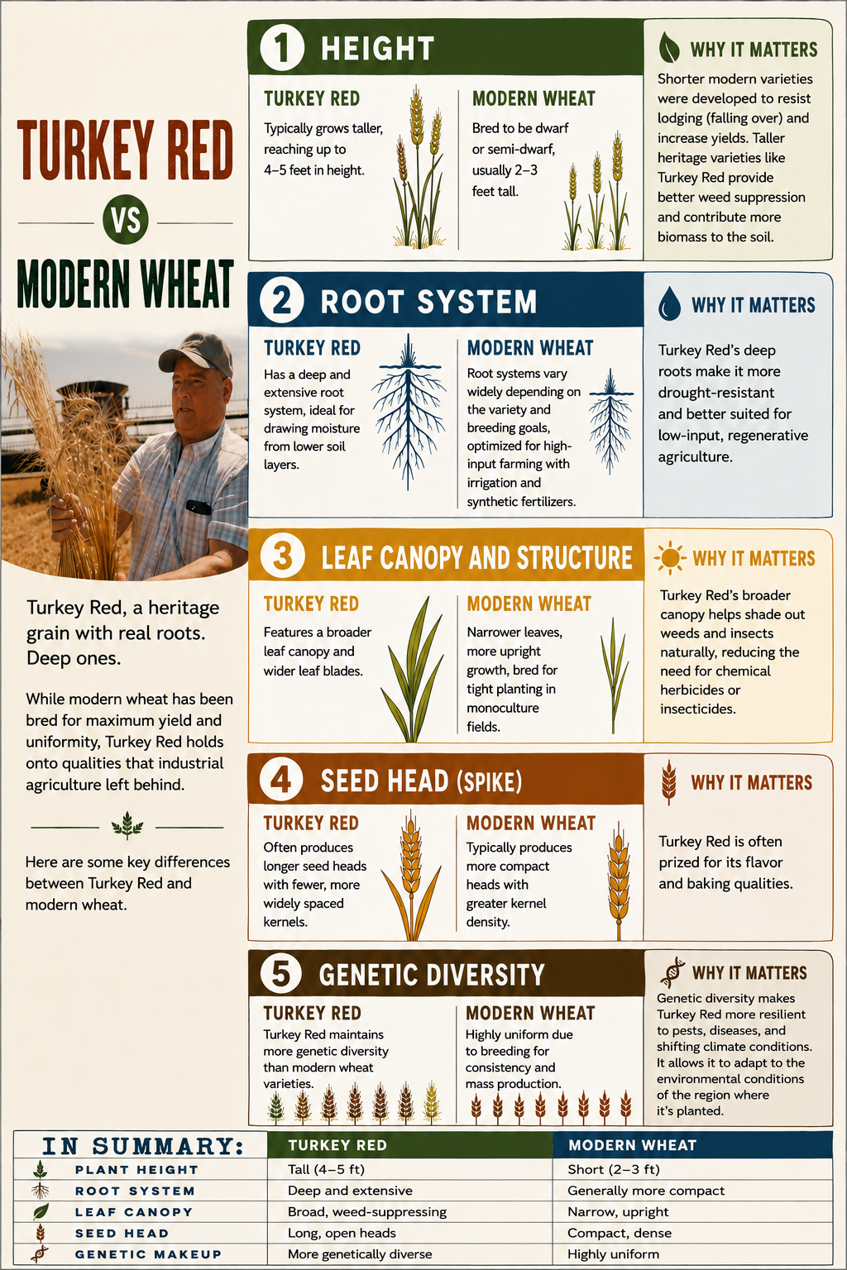
Older varieties and landraces valued for their history, flavor, regional importance, and genetic diversity. The exact meaning of “heritage” can vary by grower and source.
Examples: Turkey Red, Red Fife, Rouge de Bordeaux, and White Sonora.
Modern wheat
Varieties shaped by contemporary breeding
Conventional breeding has developed modern varieties for goals such as reliable yields, disease resistance, lodging resistance, and consistent milling or baking performance.
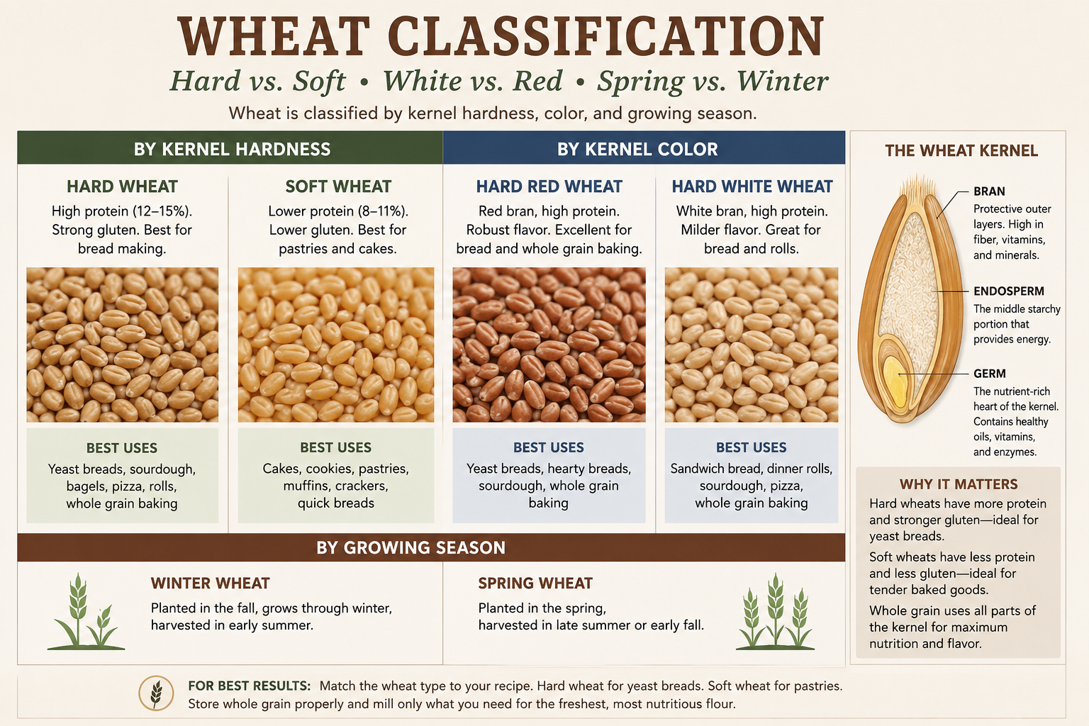
Examples: hard white, hard red, and soft white wheat. Hard white wheat has a mild flavor and can be a friendly place to begin with bread.
Other traditional grains: rye, barley, millet, sorghum, and teff have their own histories and uses. “Ancient,” “heritage,” and “modern” can be applied differently across sources, and these grains are not all types of wheat.
My favorite heritage wheat
Turkey Red
Turkey Red is a heritage hard red winter wheat associated with Mennonite immigrants from the region of present-day Ukraine and their settlement on the Great Plains in the 1870s. Its history is connected to the Black Sea region, and it carries the legacy of older wheat populations.
I love its rich, nutty flavor and beautiful whole-grain color. It works well in my sandwich bread, sourdough, rolls, and pizza dough.
A note on the history: The familiar account says Mennonite families brought Turkey Red seed to Kansas in the 1870s. Historians have noted that the exact route and timing are more complicated: evidence for seed carried by immigrant families is limited, while larger seed imports and promotion are documented later in the 1880s. The sources below show both accounts.
Why I bake with them
Heritage & Ancient Grains
I choose to bake with heritage and ancient grains because I appreciate using grains connected to the food and farming traditions of generations before us. Each one brings its own history, flavor, and baking character to a loaf. I enjoy learning what each grain contributes and how it connects me to our agricultural heritage.