
Lesson 7
Storing Whole Grains and Fresh-Milled Flour
Whole grain berries keep better than flour because the kernel is still intact. Once the grain is milled, the bran and germ are broken open and the natural oils are exposed to air. Heat, light, and moisture can dull the flour’s flavor and shorten its best-quality storage time.
Store Whole Grain Berries
Think of the grain berry as your pantry supply and the flour as something you make when you need it. Keep the berries completely dry, tightly covered, and in a cool, dark spot away from sunlight, heat, moisture, and pests. Here are two easy container options:
For your bulk supply
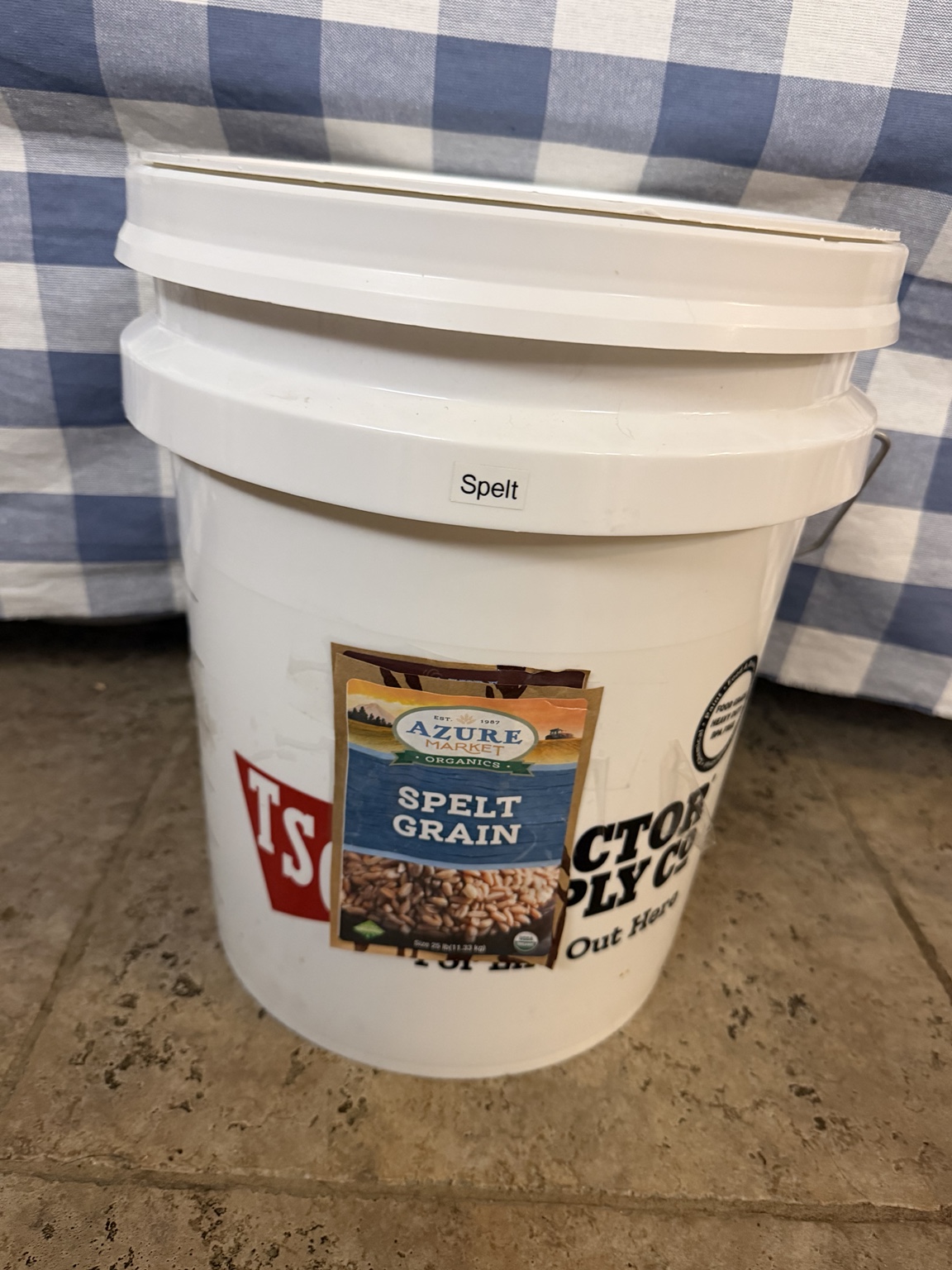
5-Gallon Food-Grade Buckets
- Use a clean, dry, food-grade bucket with a lid that closes tightly. I use Gamma Seal® lids because the screw top is convenient to open and close.
- Keep the bucket in a cool, dry, dark place, raised off the floor and away from a stove, heater, sunny window, or damp area.
- Label the outside with the grain name and purchase date. Use the oldest grain first.
- Open the main bucket only to refill a smaller jar or container, then close it again.
For a small working supply
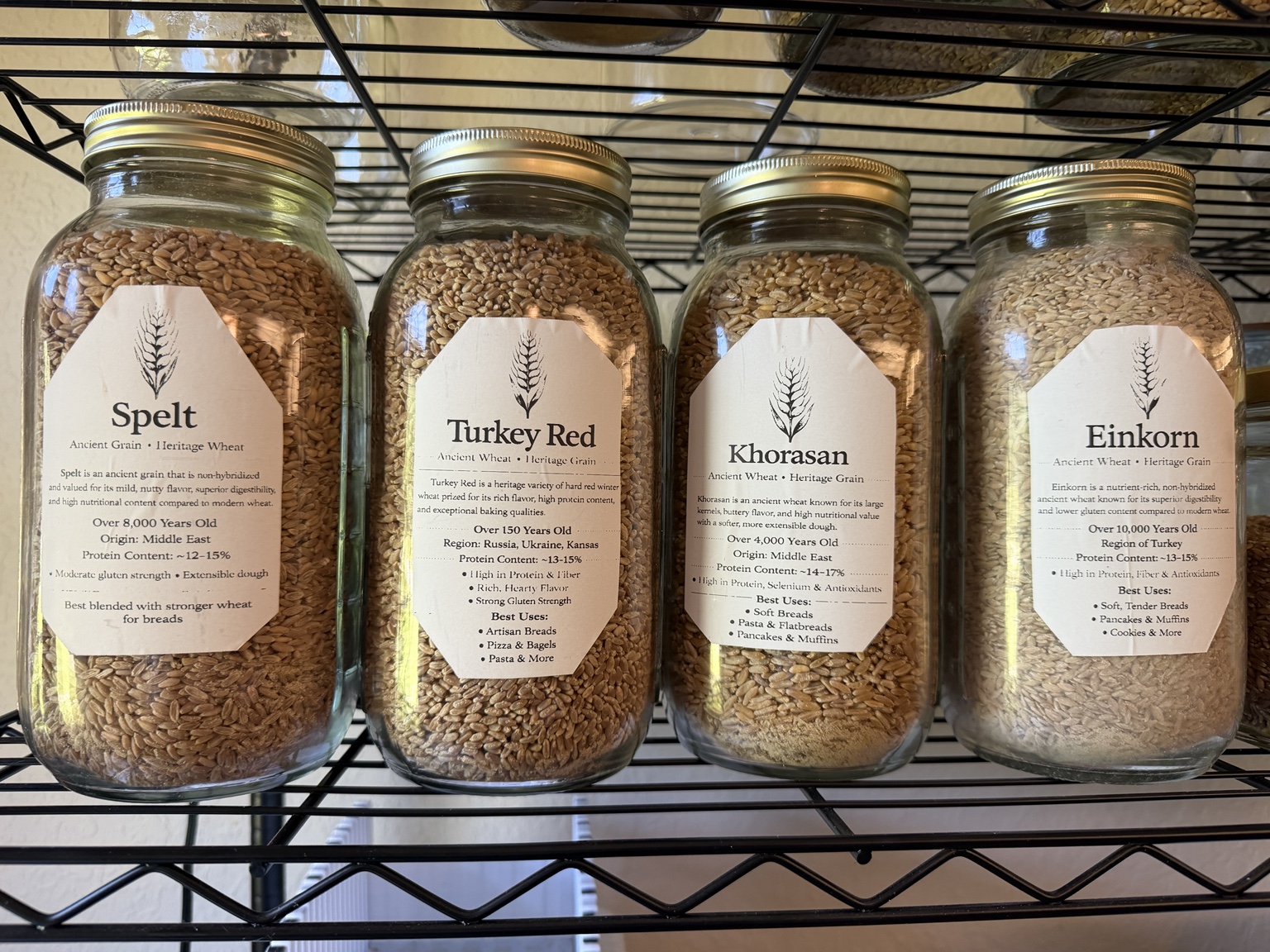
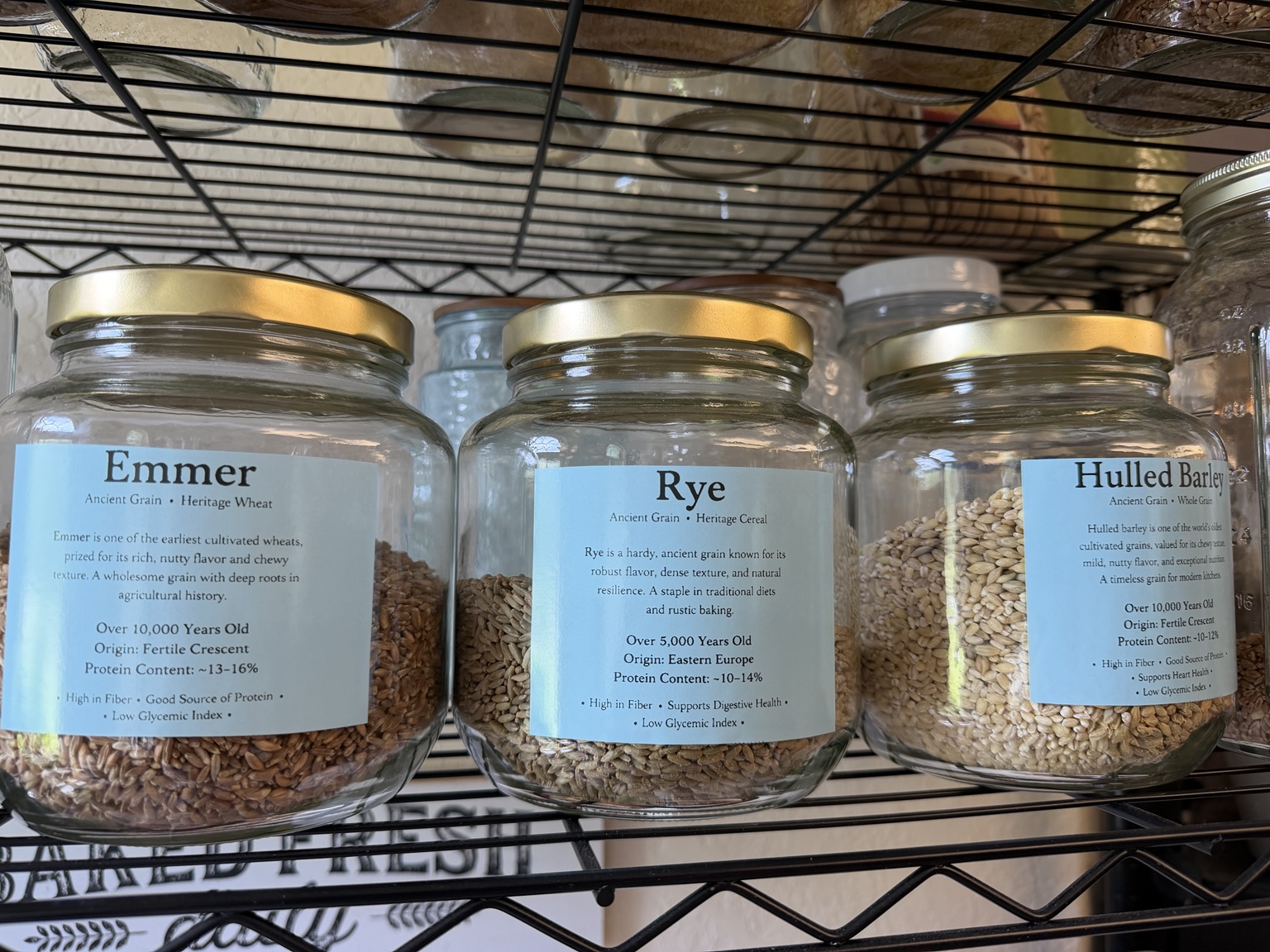
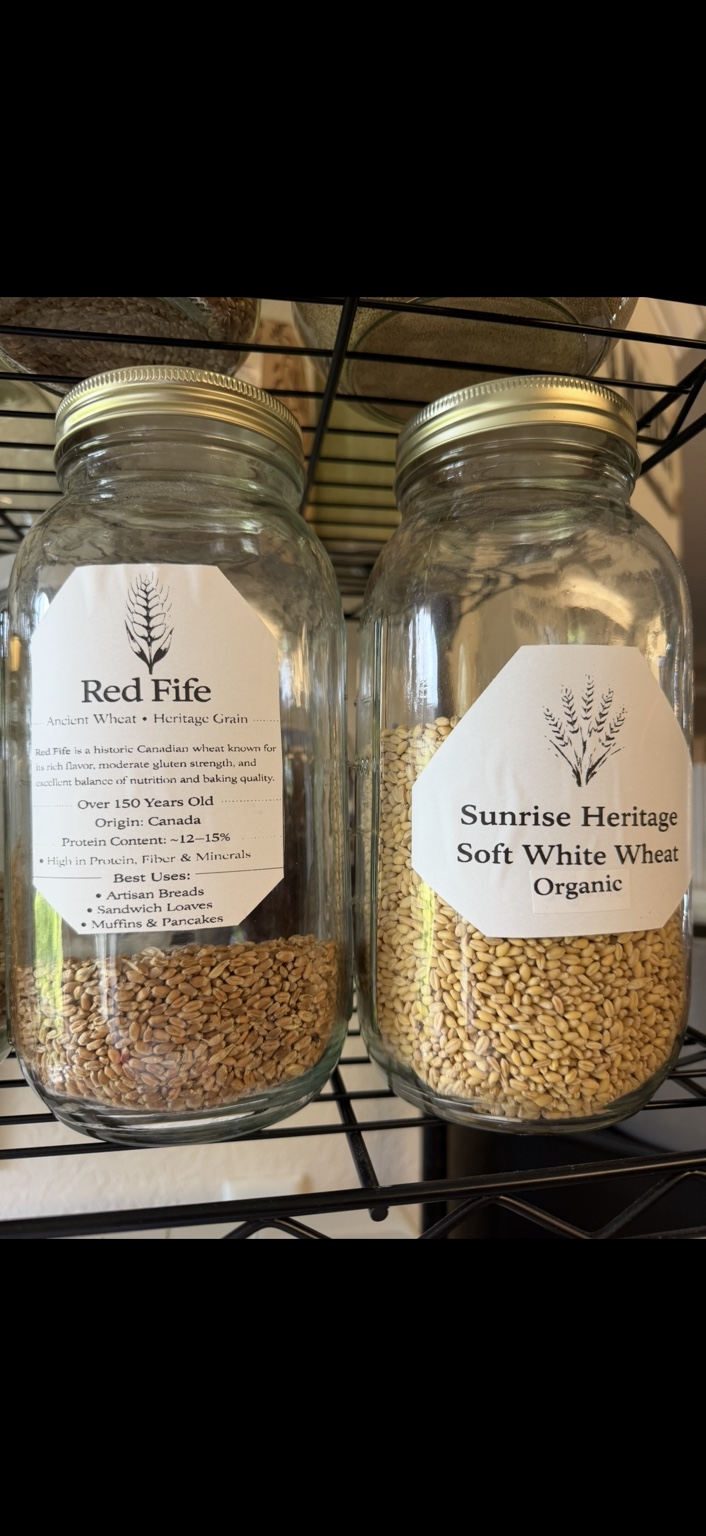
Glass Jars
- Make sure the jar and lid are clean and completely dry before filling.
- Add only dry whole berries and close the lid snugly.
- Label the jar with the grain and date, then keep it in a cool cupboard away from sunlight and moisture.
- Use the jar for the grain you reach for often; keep the bulk bucket sealed between refills.
Keep moisture out. Do not put damp berries into a bucket or jar. If grain becomes wet, moldy, or musty-smelling, do not mill or eat it.
Dry grain can last a long time, but there is no single shelf-life guarantee for every home. Utah State University Extension cites research in which wheat kept acceptable quality for 25 years in a cold basement, compared with 5 years in hot storage. That describes one study under particular conditions; it does not mean a regular bucket is guaranteed to keep grain for decades. For everyday baking, keep berries cool and dry, check them now and then, and rotate older grain forward.
Store Fresh-Milled Flour
Freshly milled flour is at its freshest right after milling. I mill what I need for a recipe and use it that day when I can. If you mill extra, seal it in an airtight container and keep it cool. These are Melissa’s practical quality guidelines; flour’s keeping time varies with temperature, packaging, and how often the container is opened.
Room Temperature
For the best flavor, use within 1–3 days. Keep the flour tightly covered and away from heat and sunlight.
Refrigerator
Store airtight and use within about 1 week.
Freezer
For longer storage, freeze in an airtight, freezer-safe bag or container. About 6 months is a useful quality guideline.
When you take flour from the refrigerator or freezer, let the closed container come to room temperature before opening it. This helps keep condensation from landing on the flour.
Make-ahead Flour for Busy Baking Days
You can mill and measure flour ahead for a specific bread, waffle, pancake, or cookie recipe. Freeze only the flour portion of the mix; add the other ingredients when you make the recipe unless you have a separate reason to store those ingredients together.
- Measure the flour or grain blend the recipe calls for.
- Place it in a freezer-safe bag or airtight container, pressing out extra air.
- Label it with the recipe name, grain blend, amount, and date.
- Freeze it until baking day. Let the sealed package warm to room temperature before opening.
For more detail, see Utah State University Extension’s food storage conditions and the Whole Grains Council’s storage guide. The Council suggests airtight storage and gives a 2–6 month freezer quality range for whole-grain flour, depending on the grain.