
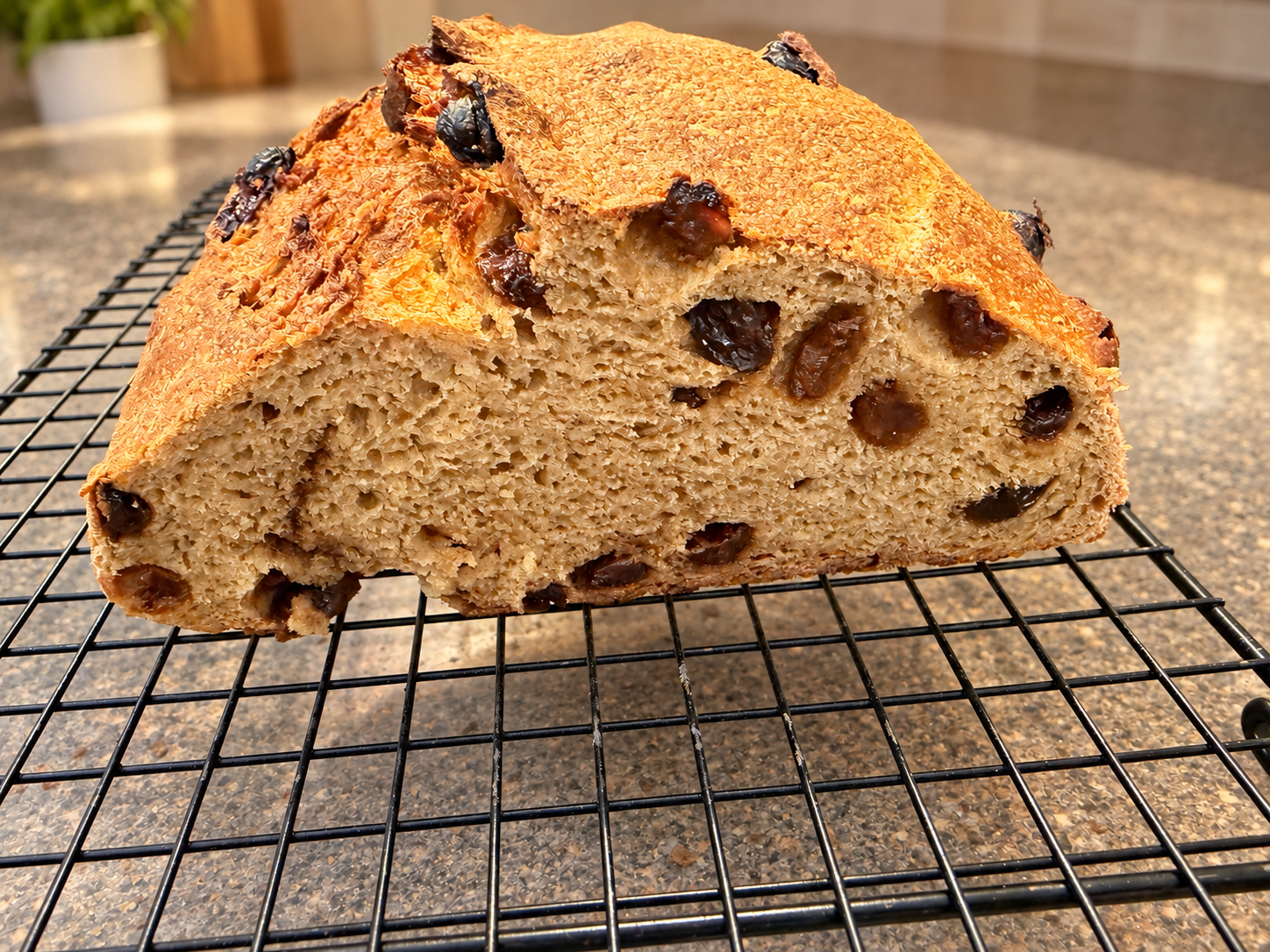
A favorite ancient grain
Why I love baking with spelt
Spelt is my new favorite wheat. It has an ancient history, is soft and easy to work with, and is one of the more affordable ancient grains. Baking with spelt makes me feel connected to the bread traditions of Jesus’ time.
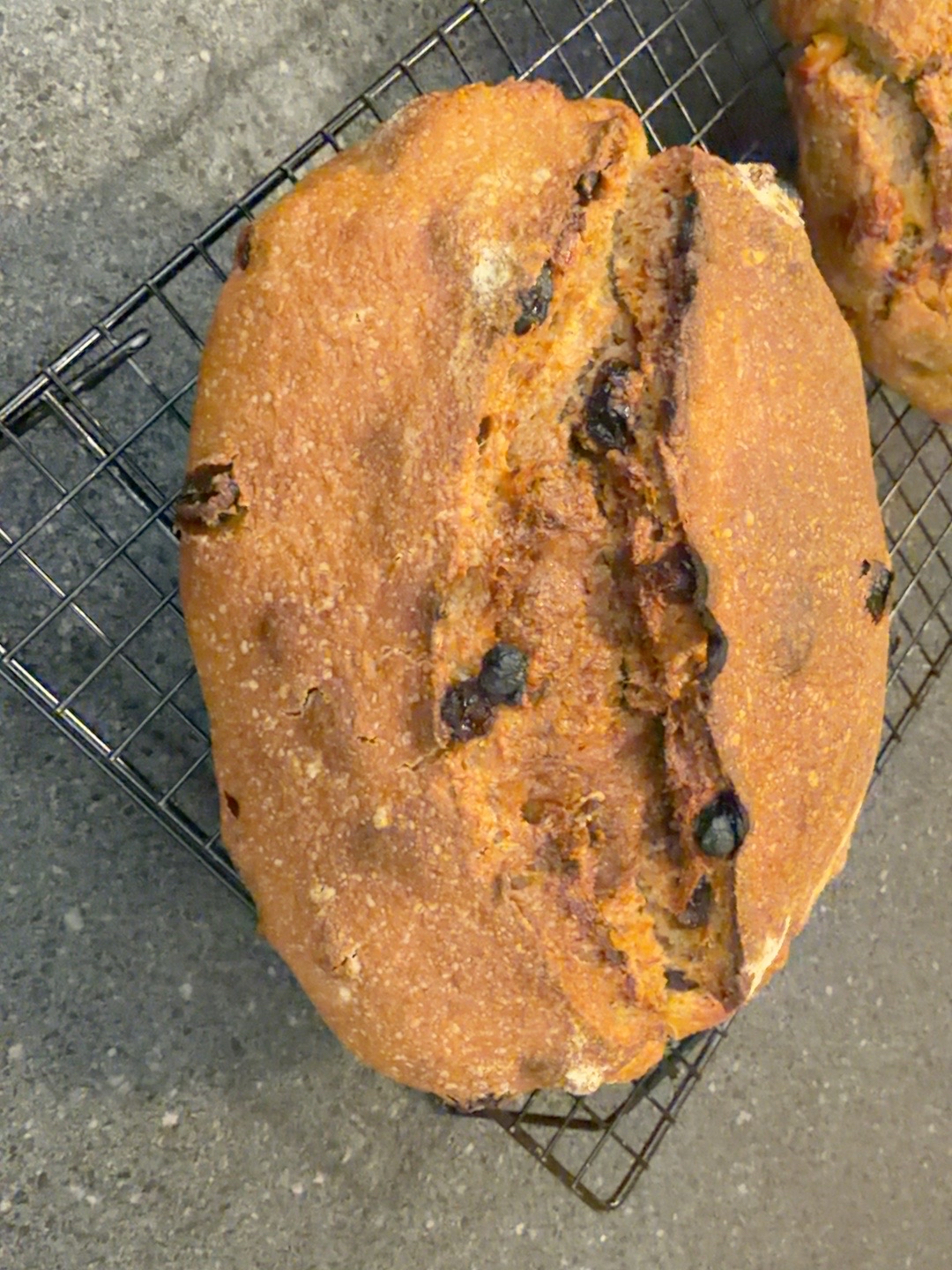
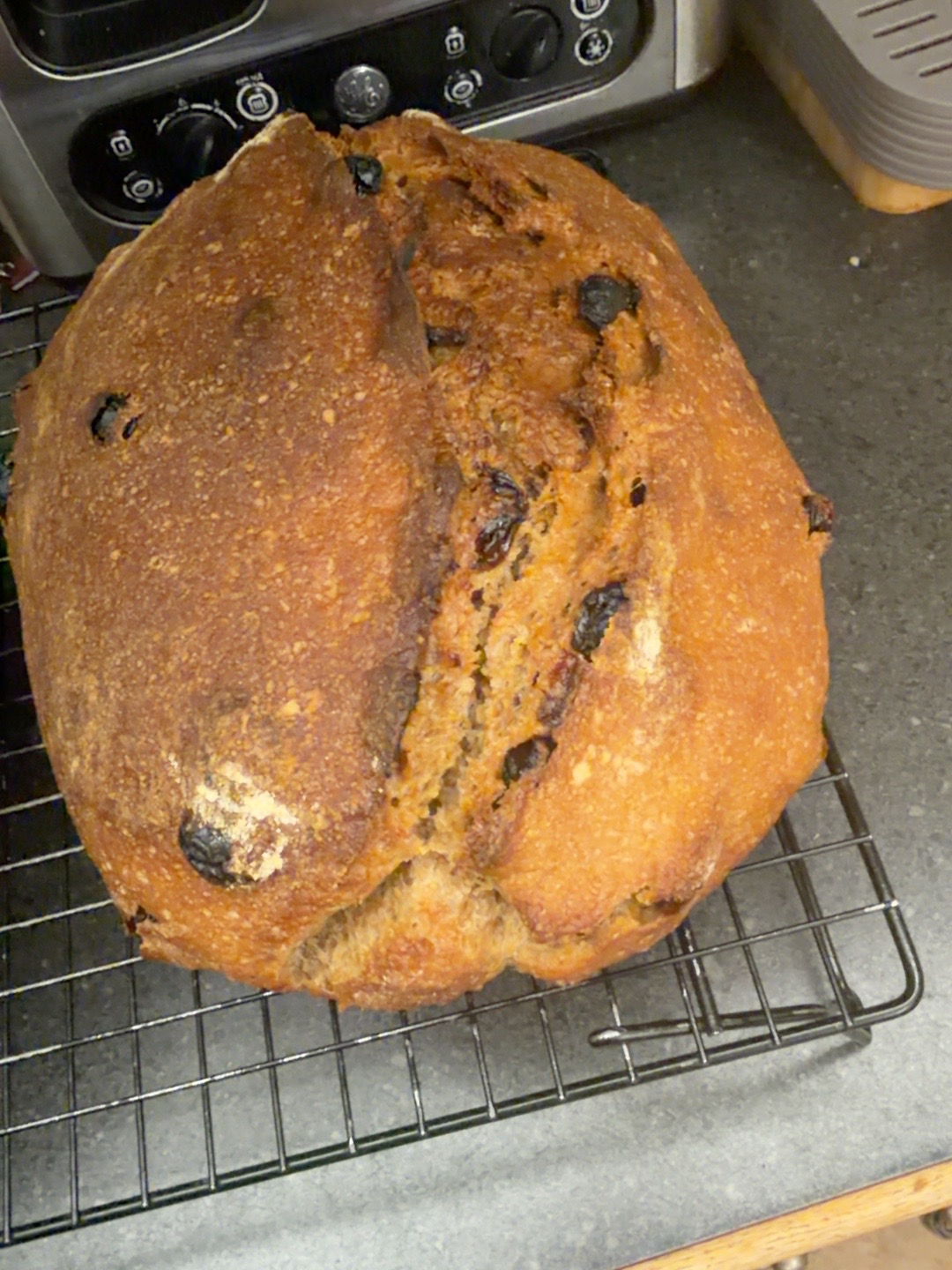
Makes 1 loaf
Ingredients
- 475 g freshly milled whole-spelt flour
- 325 g water, plus ½ tablespoon for dissolving the salt
- 100 g sourdough starter
- 30 g honey
- 9 g salt
- Raisins, to taste
- 3 tablespoons coconut sugar
- Cinnamon, to taste
For the cinnamon-raisin loaf: Laminate the raisins into the dough after the final coil fold. During final shaping, sprinkle on the coconut sugar and cinnamon to taste.
Feed the starter for this loaf: Mix 50 g refrigerated starter with 50 g water at 75°F, 25 g rye flour, and 25 g Turkey Red flour. This makes about 150 g; use 100 g in the dough. My starter comes from a 100-year-old culture. For the recorded feeding, I mixed it at 2:35 p.m. The starter was 62°F, the flour was cold from the freezer, and I kept the build in my proofing box at 77°F. It had doubled by about 5:30 p.m., roughly 3 hours later. Timing can vary, so watch for the rise.
Stretch, fold, shape, and bake
Method
- Mix the spelt flour, water, starter, and honey until combined. Cover and let the dough rest so the flour can hydrate.
- Add the salt with the extra ½ tablespoon of water. Work it into the dough.
- Build dough strength with stretch-and-folds and coil folds, allowing the dough to rest between sets.
- After the final coil fold, laminate in the raisins. Gently stretch the dough, scatter the raisins over it, then fold the dough back over itself.
- Continue bulk fermentation until the dough looks puffier and has expanded. The starter for this bake had passed its peak, so the timing was less predictable; watch the dough rather than relying only on the clock.
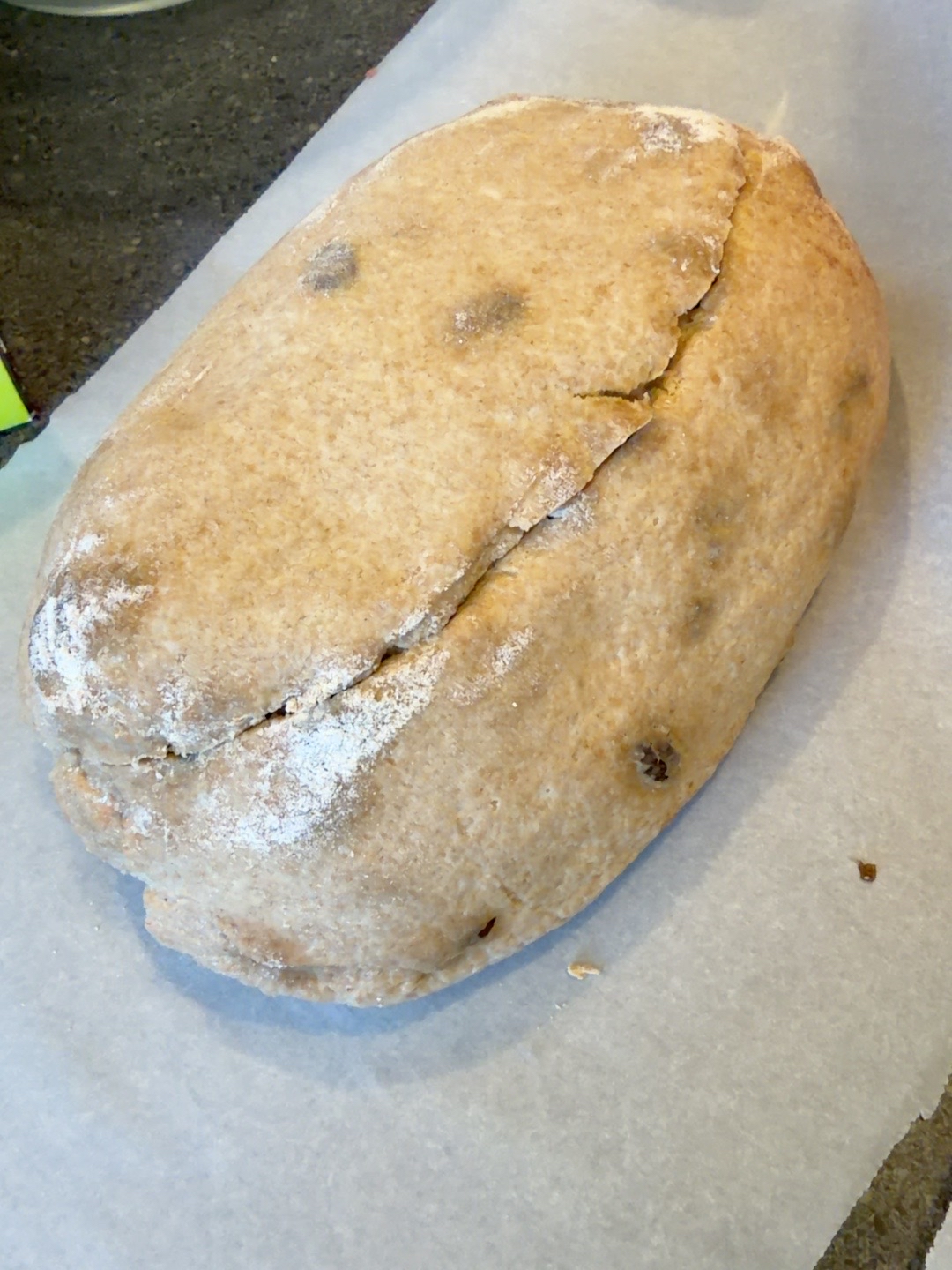
- When bulk fermentation is complete, turn the dough onto a lightly floured surface and preshape. Let it rest briefly.
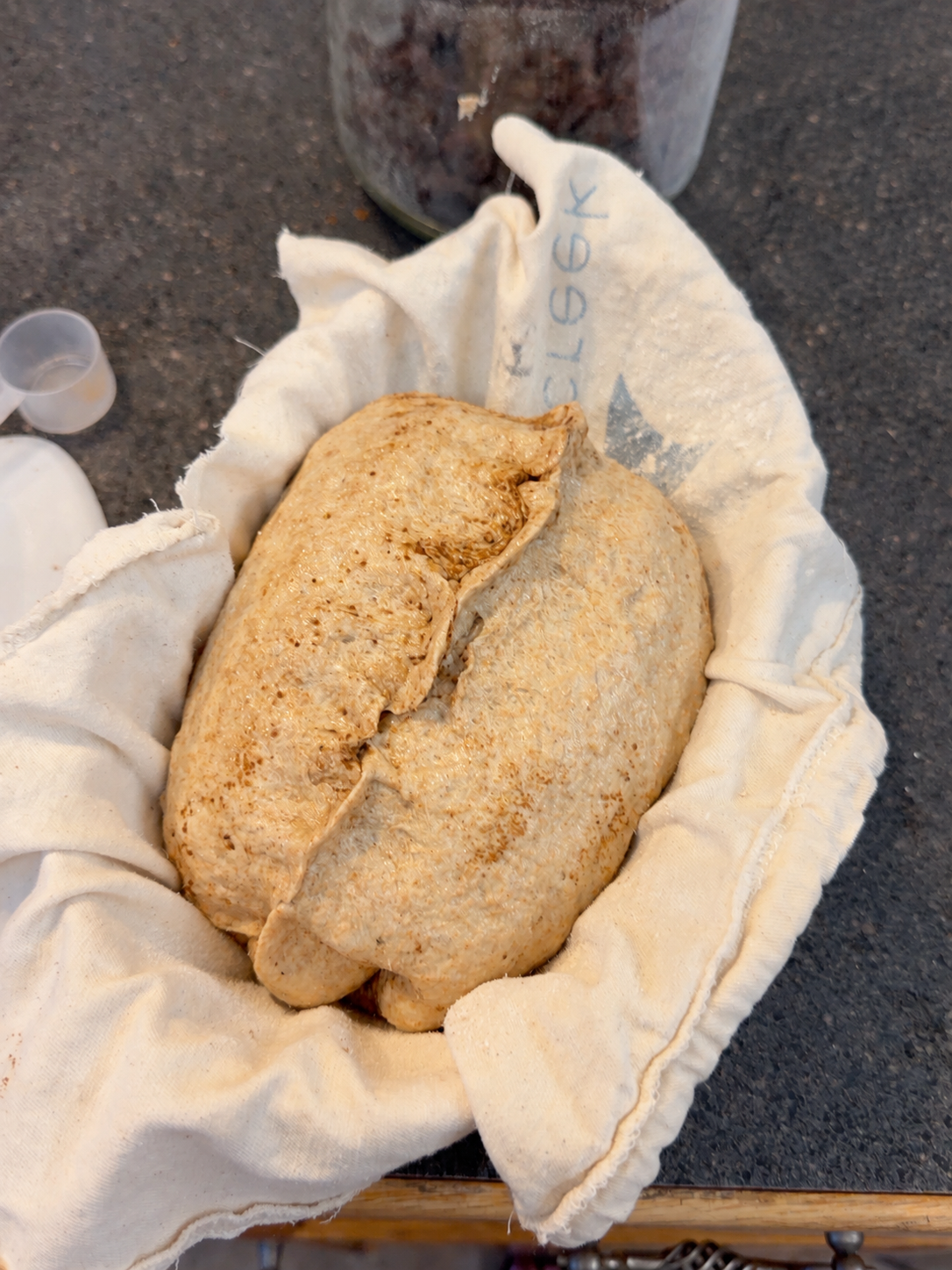
- During final shaping, sprinkle the coconut sugar and cinnamon over the dough, then roll it up and shape the loaf. Place it seam-side up in a well-floured proofing basket.
- Cover and refrigerate overnight. For this three-loaf batch, the dough stayed refrigerated for more than 24 hours; proofing time can vary.
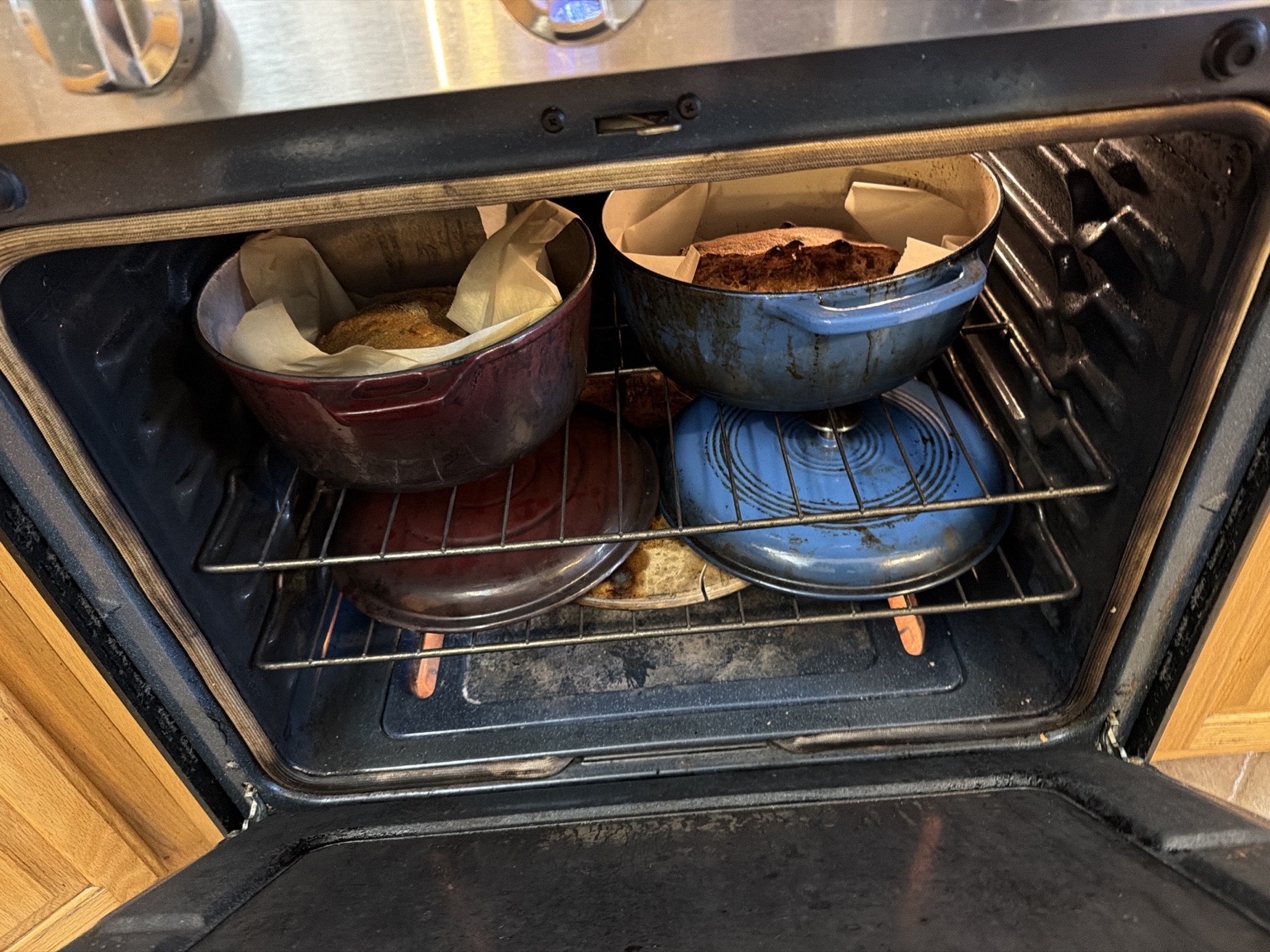
- Preheat the oven and Dutch oven to 500°F. Bake covered for 10 minutes at 500°F, then lower the oven to 450°F and bake covered for another 10 minutes.
- Remove the lid and continue baking until the crust is browned and the center is about 195–200°F. Baking time varies with loaf size, Dutch oven, and oven.
- Cool on a rack before slicing.